
Custom Cosmetic Bags with Logo: 16 Branding Options Explained
Choosing a logo method for a cosmetic bag is not simply a choice between printing and embroidery. The right option depends on the bag material, artwork, desired finish, order quantity and how the product will be used. This guide compares 16 ways to create custom cosmetic bags with logo branding and explains what buyers should confirm before production.
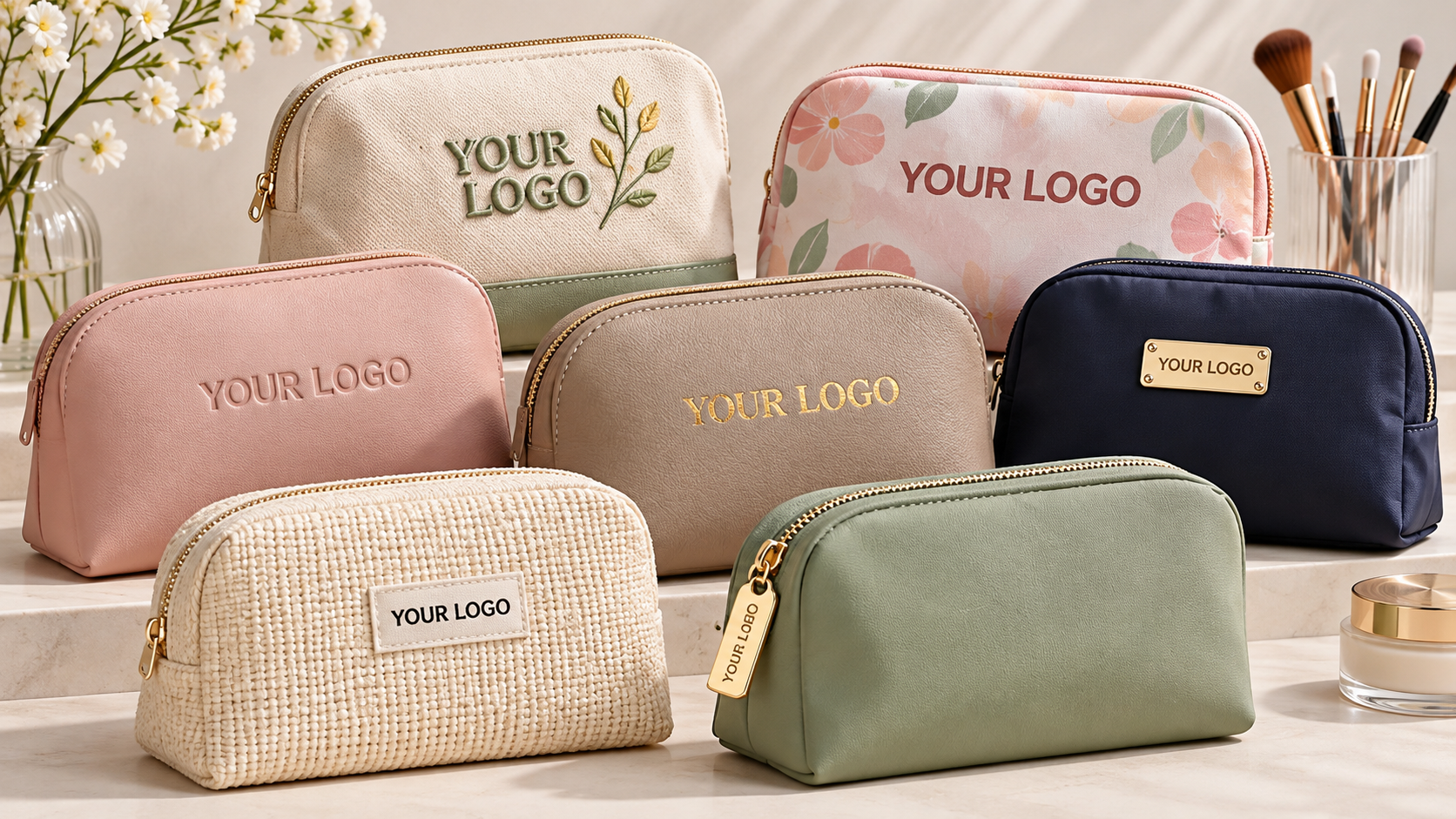
Different logo techniques can change the texture, colour and perceived value of a custom cosmetic bag.
A branding method that looks excellent on cotton canvas may not be suitable for clear PVC, quilted fabric or soft PU leather. Before comparing techniques, define the bag material, logo size, number of colours, placement and target price. If you are still deciding on the product itself, see Tongjin’s custom cosmetic bag manufacturing options.
- For simple, bold artwork: screen printing or hot foil stamping.
- For detailed, multi-colour artwork: digital printing or heat transfer printing.
- For a textured textile finish: embroidery, woven labels or patches.
- For understated premium branding: embossing, debossing or a metal logo plate.
- For all-over graphics: sublimation printing on a compatible polyester fabric.
Why the Logo Method Matters
Your logo is part of the product construction, not a detail to add at the end. It affects appearance, hand feel, durability, unit cost and sometimes the choice of material itself. The Promotional Products Association International’s overview of common decoration methods also highlights how screen printing and embroidery suit different materials and artwork.
For reliable results, the branding method should be selected before the sample is made. A physical sample can then show whether fine lines remain clear, colours look correct and the logo sits flat on the intended area.
16 Logo Options for Custom Cosmetic Bags
Printed Logo Methods
1. Screen Printing
Ink is pushed through a prepared screen onto the bag surface. It is a practical option for bold logos with a limited number of solid colours and is commonly used on cotton, canvas and suitable polyester fabrics.
Best for: simple artwork and larger orders2. Heat Transfer Printing
The design is transferred with heat and pressure. It can reproduce gradients, small details and multiple colours more easily than traditional screen printing, subject to the material’s heat tolerance.
Best for: detailed, full-colour logos3. Digital Printing
Digital printing is useful for complex artwork, tonal changes and photographic effects. The exact process and result depend on the substrate, surface coating and required colour performance.
Best for: complex graphics and colour variation4. Sublimation Printing
Sublimation turns dye into gas so it bonds with compatible polyester fibres. It can produce edge-to-edge graphics with a smooth feel, but it is generally intended for light-coloured polyester-based materials.
Best for: all-over polyester designs5. UV Printing
UV-curable ink is hardened with ultraviolet light. It can create sharp, colourful graphics on selected smooth surfaces, including some coated, plastic or rigid components, after compatibility testing.
Best for: selected smooth or coated surfacesEmbroidery and Label Options
6. Embroidery
Thread is stitched directly into the fabric, adding texture and a durable, crafted appearance. It works especially well on canvas, cotton, denim and other fabrics with enough stability to support the stitches.
Best for: premium textile branding7. Woven Label
The artwork is woven into a separate textile label and then sewn onto the bag or into a seam. Woven labels can give makeup bags with logo branding a neat retail finish without printing directly onto the main material.
Best for: small brand marks and seam details8. Printed Label
A printed fabric label can reproduce finer details and more colours than many woven labels. It is suitable for care information, brand stories or detailed logos placed inside or outside the bag.
Best for: fine detail and information labelsLeather, Raised and Recessed Branding
9. Leather Patch
A genuine or synthetic leather patch can be printed, embossed or debossed before it is stitched onto the bag. It creates a distinct branded feature and pairs naturally with canvas and casual travel styles.
Best for: lifestyle and heritage-inspired designs10. Debossed Logo
A custom die presses the artwork below the surface. Debossing produces subtle, tone-on-tone branding that works well on suitable PU, leather-like materials and patches.
Best for: understated premium branding11. Embossed Logo
Embossing raises the logo above the surrounding surface. The result is tactile and refined, although the material thickness and logo detail must suit the moulding process.
Best for: tactile, tone-on-tone logos12. Hot Foil Stamping
Heat and pressure apply a coloured or metallic foil to the surface. Gold, silver and other foil finishes can make simple artwork stand out on suitable PU or leather-like materials.
Best for: metallic accents and gift collectionsPatches, Hardware and Logo Accessories
13. Metal Logo Plate
A customised metal plate adds weight and a polished hardware detail. Plating colour, surface finish, attachment method and resistance to scratching should be confirmed during development.
Best for: premium retail collections14. Rubber or Silicone Patch
A soft moulded patch can create raised details and strong colour contrast. It suits sporty, travel and water-resistant designs, depending on the bag construction and attachment method.
Best for: modern, flexible branding15. PVC Patch
A moulded PVC patch can reproduce dimensional shapes and multiple colours. It is often used when a bold, casual or outdoor-inspired logo treatment is required.
Best for: colourful 2D or 3D effects16. Custom Logo Zipper Puller
The logo becomes part of the zipper hardware rather than the bag panel. Custom pullers can be developed in metal, rubber, silicone or selected plastics to reinforce the brand through a functional detail.
Best for: discreet branding and coordinated hardwareLogo Method Comparison
| Branding goal | Suitable options | Key point to check |
|---|---|---|
| Economical solid-colour logo | Screen printing | Artwork colour count and surface suitability |
| Detailed or multi-colour graphic | Heat transfer, digital or UV printing | Material compatibility and colour sample |
| Premium textile appearance | Embroidery or woven label | Fabric stability and minimum line thickness |
| Subtle luxury finish | Embossing, debossing or foil stamping | Material thickness, heat and pressure tolerance |
| Dimensional brand feature | Metal, rubber, silicone or PVC element | Mould cost, attachment and finish |
| Branding integrated into function | Custom logo zipper puller | Puller size, weight and zipper compatibility |
How to Choose the Right Logo Technique
Start with the bag material
Confirm whether the bag will use cotton, canvas, polyester, nylon, PU, PVC, TPU, velvet or another material. Coatings, texture and heat sensitivity can change which processes are practical.
Review the artwork
Count the colours and check gradients, fine text, thin lines and the intended logo size. Complex artwork may need simplification for embroidery, moulding, embossing or screen printing.
Match the finish to the brand position
A metal plate or subtle debossing can support a premium retail look, while screen printing may be the more practical choice for a promotional programme with bold artwork.
Consider quantity and setup
Custom screens, dies and moulds create setup work. Their cost is distributed across the order, so the same technique can have a different cost impact at different quantities. Tongjin’s standard MOQ for custom cosmetic bag projects is 500 pieces.
Approve a physical sample
Review the actual colour, position, scale, surface finish and attachment before bulk production. The approved sample should become the practical reference for manufacturing and inspection.
Artwork and Colour Preparation
Whenever possible, provide an editable vector logo such as AI, EPS, SVG or print-ready PDF, together with Pantone references and a placement guide. Vector artwork can be resized without the pixelation associated with low-resolution raster images. Adobe’s official guidance confirms that common logo asset formats include SVG, EPS and AI files, as well as raster formats.
- Supply the original logo file, not a screenshot copied from a website.
- State the required logo width and preferred position.
- Provide Pantone references when colour matching is important.
- Convert fonts to outlines or include the necessary font information.
- Show acceptable alternatives if the logo has very fine details.
Sampling and Quality Checks
A sample is the most useful way to assess custom logo makeup bags before committing to production. Check alignment, edge definition, colour, adhesion, stitch tension, surface distortion and the way the logo looks when the bag is filled.
Testing requirements should reflect the material, decoration method and destination market. For textile projects where colour transfer or fading is a concern, buyers can discuss appropriate evaluation with the supplier or an accredited laboratory. AATCC publishes internationally used textile testing methods and quality-control resources, including colourfastness evaluation.
Tongjin’s sampling and production teams review branding together with the bag construction. You can learn more about the people and process on the Tongjin factory page. For a broader introduction to sourcing logo bags for beauty programmes, read our guide to branded cosmetic bags.
Frequently Asked Questions
What is the MOQ for custom cosmetic bags with a logo?
Tongjin’s standard minimum order quantity is 500 pieces. The most practical specification still depends on the bag style, material and logo technique, so these details should be reviewed together before sampling.
Which logo method is best for cosmetic bags?
There is no single best method. Screen printing is practical for simple artwork, heat transfer and digital printing suit detailed colour graphics, embroidery adds textile texture, and embossing or metal plates can create a more understated premium finish. The bag material and brand objective should guide the choice.
Can I use a multi-colour or gradient logo?
Yes. Digital printing, heat transfer, sublimation and selected UV printing processes may reproduce gradients and multiple colours. Compatibility depends on the chosen bag material, so a physical sample should be approved before production.
Is embroidery suitable for every cosmetic bag material?
No. Embroidery needs a material and construction that can support the stitches without excessive puckering, tearing or distortion. Stable fabrics such as canvas and cotton are usually more suitable than very thin films or some delicate materials.
What logo file should I send?
An editable vector file such as AI, EPS, SVG or print-ready PDF is preferred. Also provide the intended logo size, placement and Pantone colours where relevant. If only a raster image is available, send the highest-resolution original file.
Can different logo methods be combined on one bag?
Yes. A bag may combine, for example, a printed front logo with a woven side label or a custom zipper puller. The combined setup, visual balance, material compatibility and cost should be reviewed during sampling.
Should I approve a logo sample before bulk production?
Yes. A physical sample lets you assess size, position, colour, texture and overall compatibility with the bag. Bulk production should follow the confirmed specification and approved sample.
Develop Cosmetic Bags Around Your Brand
Share your bag reference, logo artwork, material preference, estimated quantity and target schedule. Tongjin can review the branding options with you before sample development.
Discuss Your Project