Fish Large Cool Bag: The Ultimate Guide to Keeping Your Catch Fresh
For anglers, food vendors, or anyone transporting fresh fish, a fish large cool bag isn’t just an accessory—it’s a necessity. Imagine spending hours on the water reeling in a prized catch, only to have it spoil on the drive home. Or running a seafood market and struggling to keep deliveries fresh for customers. A high-quality large cool bag designed specifically for fish solves these problems by locking in cold, preventing leaks, and accommodating even your biggest hauls. In this guide, we’ll break down everything you need to know about choosing, using, and maintaining a fish large cool bag—so you can keep your fish fresh, safe, and ready to cook or sell.
Why a Fish Large Cool Bag Is Non-Negotiable
First, let’s clarify: a regular cool bag won’t cut it for fish. Fish, especially fresh-caught or raw seafood, is highly perishable. Bacteria grow rapidly between 40°F (4°C) and 140°F (60°C)—the “danger zone”—and can make fish unsafe to eat within hours. A standard cool bag might keep drinks cold for a picnic, but it lacks the insulation, leak resistance, and size needed to handle fish, which often comes with moisture, scales, and a larger volume.
UN fish large cool bag addresses these challenges head-on:
- Extra insulation: Most models use thick, closed-cell foam or thermal liners that maintain temperatures below 40°F (4°C) for 12–24 hours—critical for preserving fish during long trips or deliveries.
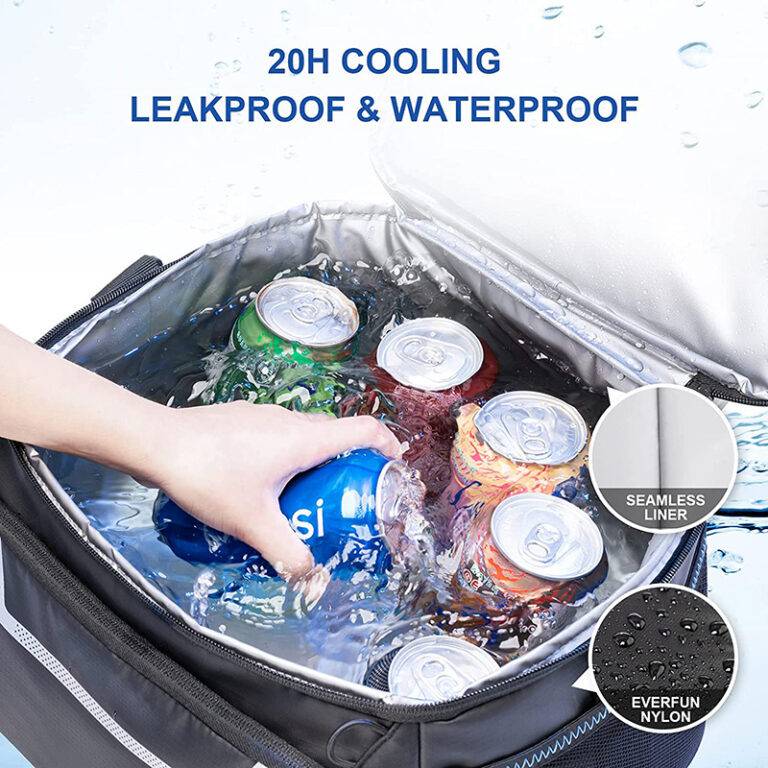
- Leakproof design: Fish releases water and juices as it’s stored, so a fish-specific cool bag has sealed seams, waterproof liners, and sometimes drainage plugs to prevent messes in your car or truck.
- Spacious capacity: “Large” here means 30–60 liters (or more)—enough to hold multiple large fish (like salmon or tuna), a cooler full of ice packs, and even additional gear like cleaning tools.
- Durability: Anglers and vendors need bags that can handle rough use—think dragging across boat decks, stacking with other supplies, or exposure to saltwater. Fish large cool bags are often made with heavy-duty polyester or PVC that resists tears, mildew, and corrosion.
How to Choose the Best Fish Large Cool Bag: 5 Key Factors
Not all fish large cool bags are created equal. To find one that fits your needs, focus on these five critical features—they’re also the top search terms people use when shopping for this product, so keeping them in mind will help you pick a bag that works for real-world use.
1. Insulation Quality: Look for “Cold Retention Time”
The most important feature of any fish cool bag is how long it keeps things cold. Check the product description for “cold retention hours”—aim for at least 18 ore, but 24+ hours is ideal for all-day fishing trips or cross-town deliveries.
What makes good insulation? Many premium bags use closed-cell EVA foam (the same material in high-end coolers) because it’s lightweight, waterproof, and traps cold air better than cheap open-cell foam. Some also have a reflective inner lining that bounces back heat, adding an extra layer of protection. Avoid bags with thin, flimsy insulation—they’ll struggle to keep fish cold on hot days.
2. Misurare: Match It to Your Haul
“Large” is subjective, so think about how much fish you typically carry. For casual anglers who fish 2–3 times a month, a 30–40 liter bag is perfect—it can hold 2–3 medium fish (like bass or trout) plus 2–3 ice packs. For commercial vendors, charter boat captains, or anglers who target big game (like marlin or halibut), a 50–60 liter bag (or larger) is better.
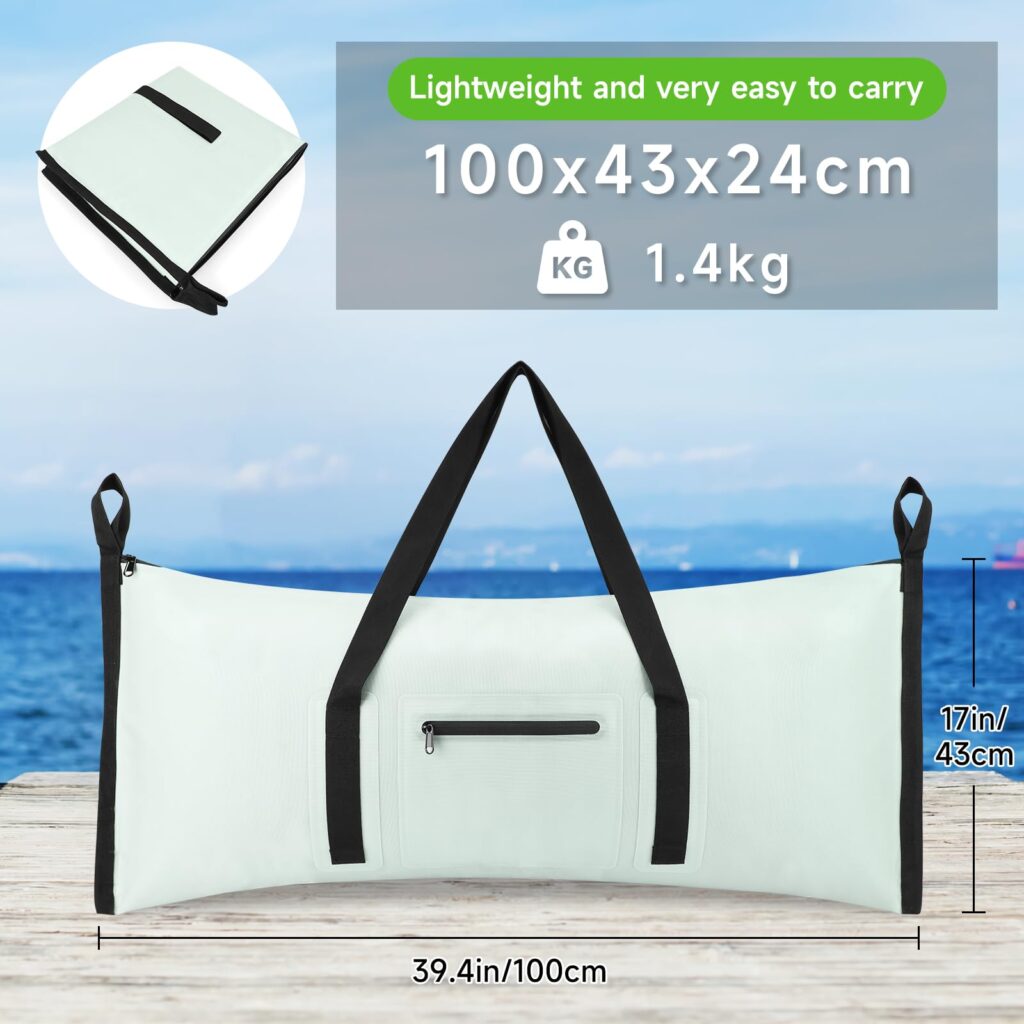
Pro tip: Don’t just consider the internal volume—check the dimensions too. A bag that’s 24 inches long, 12 inches wide, and 10 inches tall will fit longer fish without bending them (which can damage the meat) or squishing other supplies.
3. Leak Resistance: No More Messy Car Rides
Fish juice and melted ice are inevitable—so a leakproof bag is a must. Look for these details:
- Sealed seams: The liner should be heat-sealed (not just stitched) to prevent water from seeping through the edges.
- Waterproof liner material: Food-grade PVC or TPU liners are best—they’re easy to wipe clean and won’t absorb fish odors.
- Drainage plug: A small plug at the bottom lets you empty melted ice or fish juice without tipping the bag over. This is a game-changer for cleaning—no more carrying a heavy, dripping bag to the sink.
4. Durability: Built for Rough Use
If you’re using your bag on a boat, in a truck, or around sharp fishing gear, it needs to be tough. Look for:
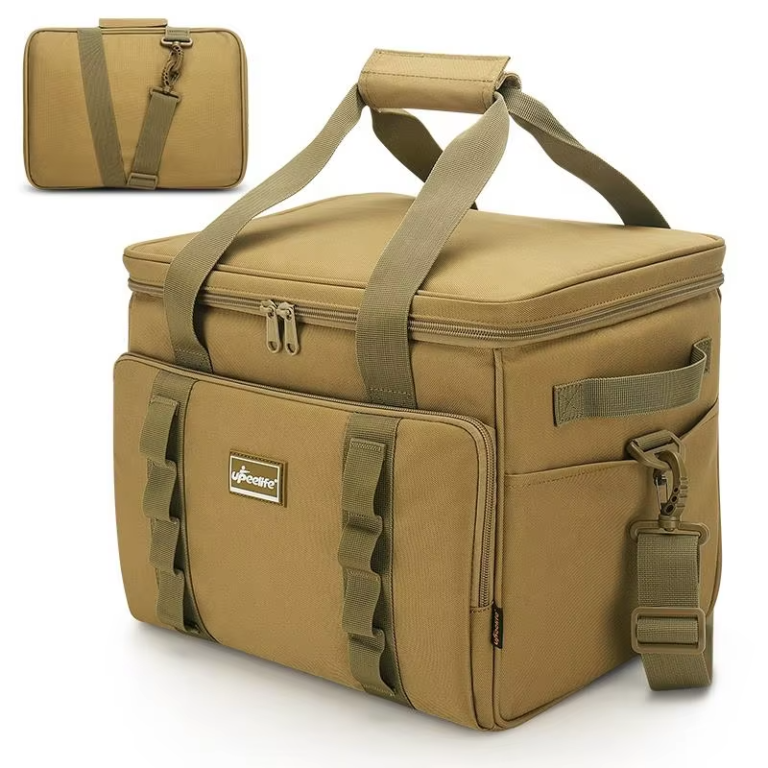
- Exterior material: Heavy-duty 600D polyester (a thick, woven fabric) or PVC-coated nylon—these resist tears, scratches, and saltwater damage.
- Reinforced handles: Padded, double-stitched handles won’t break under the weight of a full bag of fish. Some bags also have shoulder straps for hands-free carrying, which is helpful when you’re loading gear onto a boat.
- Mildew resistance: Fish can leave strong odors, and moisture can lead to mildew. Choose a bag with an antimicrobial liner that prevents mold growth and makes cleaning easier.
5. Extra Features: Convenience Matters
Small add-ons can make a big difference in how useful your fish large cool bag is. Here are the ones worth looking for:
- External pockets: Store cleaning tools, paper towels, or your phone so they’re easy to reach (and not mixing with raw fish).
- Zipper quality: A heavy-duty, water-resistant zipper will keep the bag closed tightly and prevent heat from getting in. Avoid cheap zippers—they can break after a few uses.
- Collapsible design: If you’re short on storage space, a collapsible fish large cool bag folds flat when not in use—great for anglers who store gear in small garages or boats.
Top 3 Fish Large Cool Bags for 2024
To save you time, we’ve rounded up three top-rated options based on customer reviews, insulation performance, and durability. These bags are popular on e-commerce sites and align with what people search for when looking for “best fish large cool bag.”
1. Oceanic Pro Fish Cool Bag (50L)
The Oceanic Pro is a favorite among serious anglers. It has 25mm closed-cell foam insulation that keeps fish cold for up to 24 ore, a leakproof TPU liner, and a corrosion-resistant drainage plug. The 50L capacity fits 4–5 large fish, and the exterior is made of 1680D polyester (extra thick!) that stands up to saltwater and rough handling. It also has two external pockets for gear and a padded shoulder strap. Customers love that it’s easy to clean—just wipe the liner with soap and water—and that it doesn’t hold fish odors.
2. FreshCatch XL Insulated Fish Bag (60L)
For commercial use, the FreshCatch XL is a workhorse. It has a massive 60L interior (big enough for a whole salmon or multiple tuna steaks) and 30mm foam insulation that retains cold for 30+ hours—perfect for long-haul deliveries. The liner is food-safe and antimicrobial, and the bag has four reinforced handles (so two people can carry it when full). It also has a heavy-duty zipper with a storm flap to keep rain out. One downside: it’s not collapsible, so it needs more storage space. But for vendors who need reliability, it’s worth it.
3. Coastal Catch Collapsible Fish Cool Bag (40L)
If you want portability, the Coastal Catch Collapsible bag is ideal. It folds down to just 2 inches thick when empty, but expands to 40L—great for casual anglers who don’t want to store a bulky bag. It has 20mm foam insulation (keeps cold for 18 ore), a leakproof liner, and a drainage plug. The exterior is 600D polyester, and it has a single shoulder strap for easy carrying. It’s not as durable as the Oceanic Pro or FreshCatch XL, but for weekend trips, it’s more than enough. Plus, it comes in three colors (blue, green, and gray) if you want something stylish.

How to Use and Maintain Your Fish Large Cool Bag (for Longevity)
A good fish large cool bag can last 3–5 years if you take care of it. Follow these tips to keep it in top shape:
1. Prep It Before Use
- Pre-chill the bag: The night before your trip, put ice packs in the bag to cool the interior. This helps it retain cold longer once you add fish.
- Use enough ice packs: For every 10 liters of bag space, use 1–2 large ice packs (or a bag of crushed ice). Avoid using loose ice—melted ice can make the bag heavy and messy, and ice packs stay cold longer.
- Layer fish properly: Place a layer of ice packs at the bottom, then add fish (wrap them in plastic bags to prevent juice from mixing), then another layer of ice packs on top. This “sandwich” method ensures even cooling.
2. Clean It Right After Use
Never leave fish juice or scales in the bag—they’ll cause odors and mildew.
- Empty it immediately: When you get home, dump out any melted ice or juice (use the drainage plug if your bag has one).
- Wipe the liner: Use warm, soapy water and a soft cloth to clean the inside. Avoid harsh chemicals (like bleach)—they can damage the liner.
- Air it out: Leave the bag unzipped and hang it up to dry completely. Don’t fold it until it’s 100% dry—moisture trapped inside leads to mildew.
3. Store It Properly
- Keep it dry: Store the bag in a cool, dry place (like a garage or closet). Avoid storing it in direct sunlight—heat can break down the insulation over time.
- Don’t overload it: Even durable bags have weight limits (usually 30–50 pounds). Overloading can tear handles or break zippers. Check the product manual for the weight limit.
- Repair small issues fast: If the liner gets a small tear, use a waterproof patch kit (available at outdoor stores) to fix it. If the zipper sticks, apply a little wax (like beeswax) to lubricate it.

Final Thoughts: Invest in a Quality Fish Large Cool Bag
UN fish large cool bag is an investment in fresh, safe fish. Whether you’re an angler who wants to enjoy your catch for dinner or a vendor who needs to keep customers happy, the right bag will save you time, money, and frustration. When shopping, remember to prioritize insulation, leak resistance, and size—those are the features that will make or break your experience.
And if you’re still on the fence: think about the last time you lost fish to spoilage. A
50–100 cool bag is cheap compared to wasting a $200 catch or losing a customer because of bad seafood. With the right bag, you’ll never have to throw away fresh fish again.
So grab your rod, pack your fish large cool bag, and head out—your next fresh meal (or sale) is waiting!
Tags:borse per cosmetici,tactical backpack
Contattaci per un preventivo all'ingrosso